

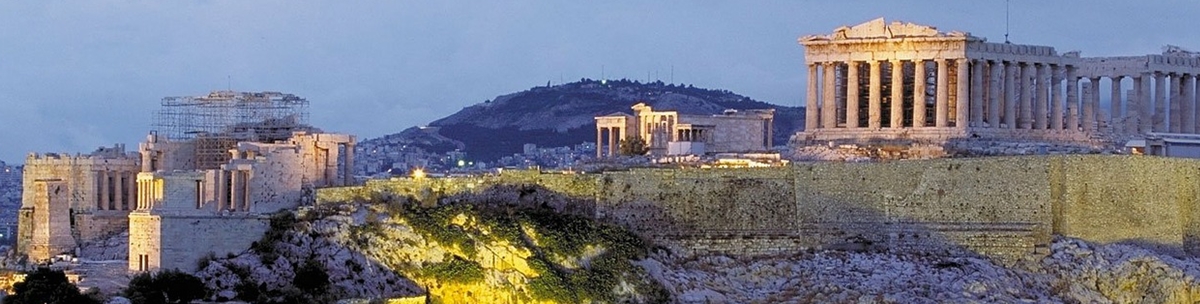

Greece, despite its small size, has a particularly rich and diverse natural environment, a distinct topography with sharp contrasts, and many areas with high ecological value.
Residents and visitors enjoy a wealth of leisure and recreation options that are unequalled in the Mediterranean. Combining a modern infrastructure and the stark beauty of the ancient world, the birthplace of Western civilization is one of the leading tourist destinations globally that satisfies young and old.
History & Culture
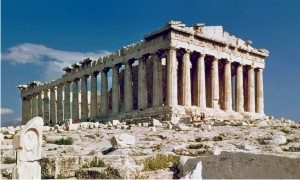
Greece offers the visitor and resident unlimited opportunities to explore the very roots of Western civilisation. Throughout the country, there are hundreds of museums, archaeological sites, and monuments that detail the rise of art, architecture, crafts, design, ideas and thought.
Gastronomy
The Mediterranean diet is a global brand that needs no introduction. There is nowhere on earth better suited for healthy, wholesome eating than Greece. Greece offers a bountiful array of raw ingredients and traditional products that will satisfy every foodie, and thrill every cook (a trip to a Greek farmers market is a joy for the senses).
Lifestyle
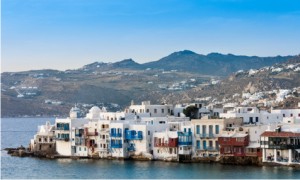
With 300+ days of sunshine per year, the climate in Greece makes living in this Mediterranean destination a year-round joy. Take a swim in the crystal clear Aegean before work. Play 18 holes at one of the nearby golf clubs in the afternoon. Or, if you need to escape it all, dash off to a luxurious spa for a little rest and relaxation.
If that’s not enough, take advantage of other nearby options like yoga, tennis, hiking, sailing, skiing, rafting, biking, kite surfing and rock climbing—just to name a few. Afterhours, an endless array of restaurants, bars, clubs, entertainment centers and cultural venues all contribute to a vibrant nightlife that is bursting with Mediterranean zeal, yet is uniquely Greek. And with a modern tourism infrastructure at your disposal, weekend getaways to some of the world’s most beautiful locales are a snap. Whatever you choose to do, healthy, joyful living is part and parcel of the Greek lifestyle.
Education
Greece offers a wide variety of international educational options for expatriates, from pre-schools to universities—especially for students seeking studies in English, French, and German. Many high schools offer the International Baccalaureate (IB) programme and have a good track record in placing students in prestigious universities, both in Greece and abroad.
At the same time, many international universities offer unique educational programs in Greece for undergraduates and graduates alike.
Health Care
Greece offers a very modern healthcare infrastructure and highly skilled physicians and specialists that have been trained in the world’s finest medical facilities. Many healthcare specialists speak English and are accustomed to treat foreign residents and visitors.
Health care in Greece is provided by the National Healthcare Service and by the private sector. Workers in Greece must be insured through one of the national insurance funds and can also choose complementary private coverage.
Transportation
Greece boasts a robust and modern transportation network that seamlessly connects air, land and sea. By plane, ship, train or car, traveling to Greece, and moving through the country, is simple and quick. Almost the entire country is covered by public transport, making travel simple within Greece.
Air
The most important entry point by air into Greece is Eleftherios Venizelos International Airport in Athens. It is situated 33 km southeast of Athens and easily accessible by highway (private vehicle or taxi), bus, train, and metro service. (www.aia.gr)
Other Greek airports also handle direct international flights from certain foreign countries, by regular and special airlines (especially during the summer months), as well as charter flights. Many of the larger islands and Greek cities also have domestic airports.
Sea
Greece offers a highly developed port and ferry network that connects all of the country’s islands as well as ports in other countries—predominantly in Italy. There are daily routes from Patras and Igoumenitsa to Italy, from the ports of Ancona, Bari, Brindizi, Venice and Trieste.
Rail
Greece’s railway network is approximately 2,500 km long, covering the greater part of the mainland and linking the country to Central Europe and Turkey. Intercity express trains allow for easy city-hopping.
Urban Transport
Athens boasts a highly sophisticated public transportation network, comprised of buses, suburban railways, and a state-of-the-art metro. Thessaloniki and other cities in Greece also have integrated public transport networks.
Road
Greece’s road network covers 117,000 kilometers. Following years of upgrades and modernisation, driving via the national highway network is now one of the easiest and most efficient ways to traverse the country. Intercity bus lines make it simple to get from point to point.